On May 17, 2026, the 36th National Day of Helping the Disabled arrived as scheduled, with this year's theme focusing on safeguarding equal rights and promoting inclusive development for persons with disabilities. In this nationwide initiative centered on the well-being of people with disabilities, Hangzhou NEUREAL Technology Co., Ltd. participated in two major events in Beijing under the core principle of "Technology-Assisted Disability Support and Universal Rehabilitation," injecting strong technological momentum into disability rehabilitation through deeply integrated #Brain-Computer Interface (BCI), VR, and AI technologies and solid practical implementations.
Participation in Beijing Public Welfare Activity for Technology-Assisted Disability Support
On May 13, to mark the 36th National Day of Helping the Disabled, the Accessibility Center of the Beijing Disabled Persons' Federation, together with specialized associations for persons with disabilities, technology-assisted assistive device enterprises, and accessibility service organizations, jointly held a public welfare activity featuring assistive device experiences and support services for persons with disabilities. The event gathered multiple tech companies specializing in rehabilitation aids, allowing persons with disabilities to personally experience how technological innovation transforms their lives through immersive demonstrations.
As a representative enterprise in the fields of Brain-Computer Interface (BCI) and neurological rehabilitation, Hangzhou NEUREAL Technology Co., Ltd. prominently showcased its core product, the VR cognitive rehabilitation system, becoming one of the most attended exhibits at the venue. Many persons with disabilities and members of the public stopped by the booth to try it out; guided by staff, they wore lightweight non-invasive brain-computer interface devices and entered immersive VR scenarios.
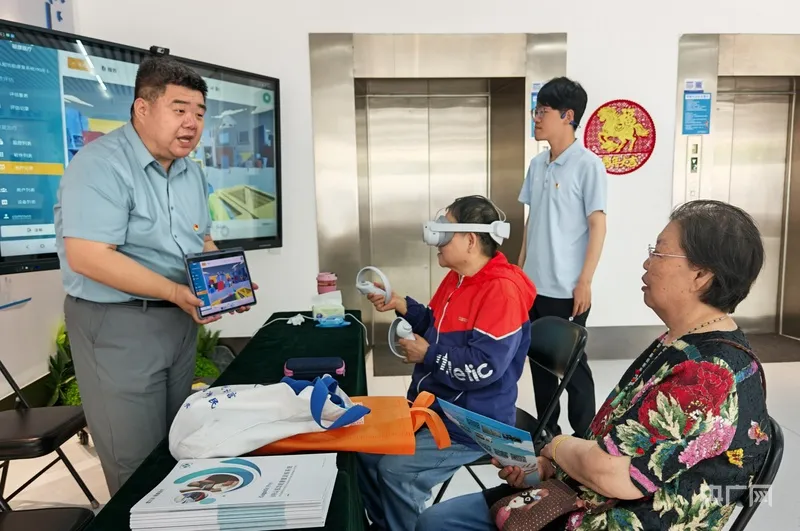
During the experience, several participants commented: "The training isn't boring; you just follow the scenario to complete it, which is much more convenient than going to the hospital." "Wearing the device lets you feel the power of technology; it's simple and easy to operate, and I felt more relaxed after finishing." Rehabilitation professionals on site also noted that this system truly applies non-invasive BCI technology to rehabilitation scenarios, requiring no extensive professional supervision while enabling precise assessment and continuous active training, effectively addressing the pain points of grassroots rehabilitation such as lack of equipment, shortage of specialists, and difficulty in sustaining treatment.
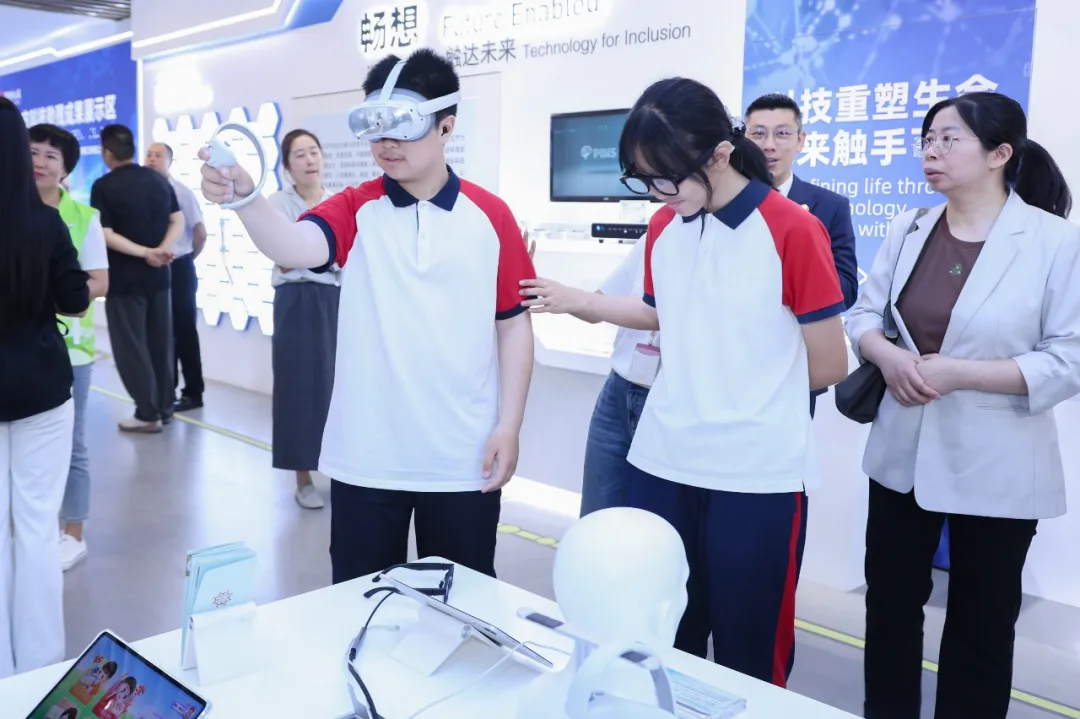
After the event, official mainstream media outlets including *Science and Technology Daily* and *Beijing Daily* reported on the activity, citing NEUREAL Technology as a typical case of technology empowering disability rehabilitation during the National Day of Helping the Disabled. This public welfare activity not only allowed more people to directly see the practical application of BCI in rehabilitation but also reinforced NEUREAL Technology's mission of "using technology to improve human brain health," fulfilling its promise to persons with disabilities through tangible, experiential, and beneficial tech products.
Keynote Speech at National Day of Helping the Disabled Event
On May 15, Mr. Kang Cheng, Founder and CEO of Hangzhou NEUREAL Technology Co., Ltd., attended a special event for the National Day of Helping the Disabled in Beijing and delivered a speech systematically elaborating on the company's practices and insights in using BCI technology to empower disability rehabilitation. In his speech, Mr. Kang stated:
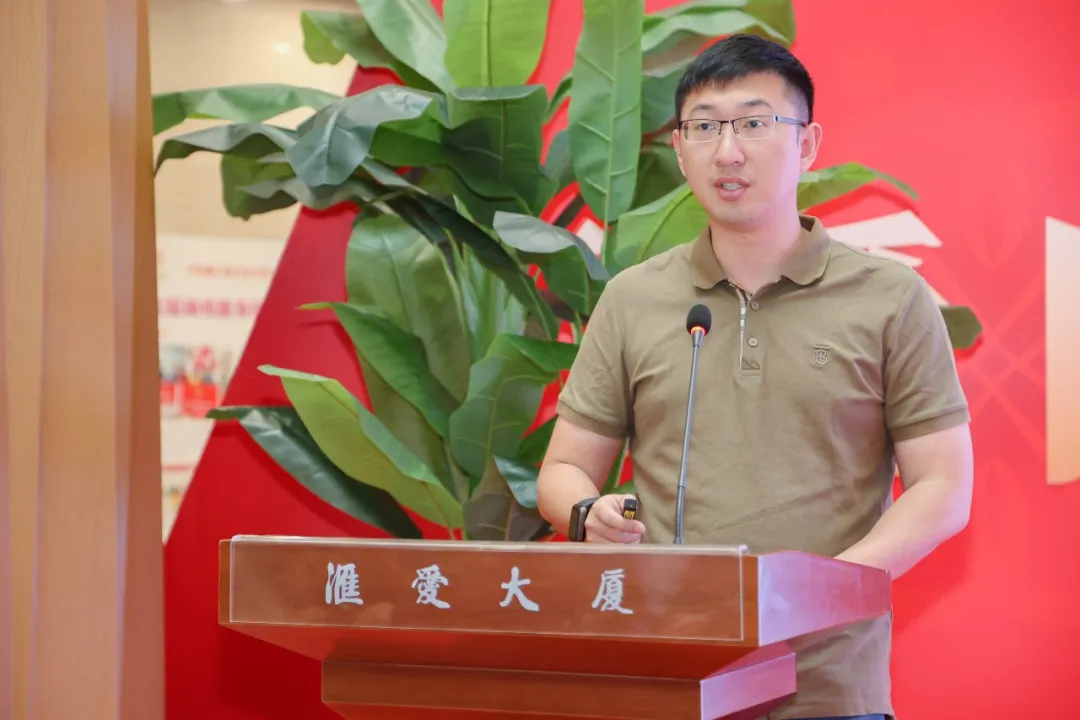
▲Kang Cheng, Founder and CEO of NEUREAL Technology
Currently, China has over 85 million persons with disabilities, with more than 50 million requiring professional rehabilitation services, yet there are fewer than 100,000 professional rehabilitation therapists. Issues such as uneven resource distribution, gaps in post-discharge rehabilitation, and a lack of active training plans pose real challenges for many families. In response, NEUREAL Technology clearly defines the core of technology-assisted disability support as making professional rehabilitation accessible to everyone in need, thereby supporting millions of families behind them.
Based on this original intention, NEUREAL Technology developed the BCI+X precision diagnosis and treatment platform for brain disorders, achieving full-cycle rehabilitation coverage from children to the elderly, with related solutions clinically validated in over 1,000 hospitals nationwide. Meanwhile, supported by the Beijing Disabled Persons' Federation and the Disability Service Demonstration Center, the products have successfully been deployed in multiple grassroots smart health and eldercare institutions in Beijing, receiving high recognition from both institutions and users. The company is currently accelerating efforts to include these products in Beijing's subsidy catalog, further expanding universal access.
However, mere deployment is not enough. To fulfill the mission of "making rehabilitation services accessible, affordable, and effective for more people," NEUREAL focuses on three directions: first, promoting grassroots facility deployment by establishing a three-tier system to enable home-based rehabilitation and grassroots coverage; second, achieving technological universality by leveraging homologous technology to develop home-use products, improving rehabilitation intervention effectiveness by 30% compared to traditional methods and reducing reliance on professional manpower; third, ensuring service continuity by connecting data links between hospitals, communities, and homes to achieve "one assessment, full-process service."
The speech also mentioned that NEUREAL Technology achieves these goals through its unique closed-loop neuromodulation diagnostic and treatment system of "induction—modeling—regulation—optimization," allowing machines to actively adapt to the brain and adjust plans in real time based on multimodal data, thus delivering truly precise rehabilitation.
From NEUREAL Technology's perspective, technology-assisted disability support should not remain confined to papers or exhibits but must create products where technology is usable, models are replicable, and ecosystems are sustainable, generating real value for persons with disabilities through pragmatic tech products. In the future, the company will continue to focus on Brain-Computer Interface (BCI), VR, and AI technologies, deepening its engagement in disability rehabilitation to inject sustained technological strength into the cause of helping persons with disabilities.
Technology for Good, Unstoppable Progress
As a national-level "Little Giant" enterprise specializing in new and refined products, NEUREAL Technology has deeply cultivated the fields of AI healthcare and non-invasive brain-computer interfaces for years, being the only industry player possessing both neural signal induction capabilities and a complete closed-loop diagnostic and treatment system.
From the on-site experience at the public welfare activity on May 13 to the concept dissemination via the keynote speech on May 15, NEUREAL consistently practiced its mission of "making advanced brain science theories truly serve those concerned with brain health" through these two engagements.
The greatest value of technology has never been to prove how advanced it is, but to make it accessible, affordable, and effective for more people. In the future, NEUREAL Technology will continue to center on Brain-Computer Interface (BCI) technology, driving the grassroots, universal, precise, and continuous nature of rehabilitation services. Standing shoulder to shoulder with the national disabled persons' federation system, medical institutions, and smart health and eldercare providers, NEUREAL aims to illuminate the rehabilitation path for persons with disabilities with the light of technology, building a beautiful future of equality and accessibility together!