Company Profile
Hangzhou NEUREAL Technology Co., Ltd. is a national-level “Little Giant” enterprise specializing in non-invasive brain-computer interface (BCI) decoding of emotions and cognition. The company focuses on medical technology R&D for brain disorders, dedicated to the clinical translation of brain health technologies. By integrating AI, BCI, VR, digital therapeutics, and transcranial Direct Current Stimulation (tDCS), NEUREAL conducts research and product development for conditions including depression, anxiety disorder, PTSD, Attention Deficit Hyperactivity Disorder (ADHD), Autism Spectrum Disorder (ASD), post-stroke cognitive impairment, and geriatric cognitive impairment. Its proprietary systems are currently deployed in numerous medical institutions across China.
The company holds multiple domestic and international medical device registration certificates, with over 80 patents and software copyrights accumulated. Its products serve more than 1,000 partner institutions nationwide, reaching millions of users. NEUREAL has initiated preclinical studies and medical device applications for BCI-related technologies, laying the groundwork for an emotion-cognition closed-loop diagnostic and therapeutic platform.
Corporate Information
Company Name: Hangzhou NEUREAL Technology Co., Ltd.
Date of Establishment: May 11, 2015
Legal Representative: Kang Cheng
Registered Capital: CNY 1,631,968
Headquarters Address: 12F, Building D, China (Hangzhou) Smart Information Industry Park, Gongshu District, Hangzhou
Industry: Application Software Development
Financing Stage: Series A+ (2025)
Development History
· 2016: Founded by initial shareholders.
· 2018: Developed VR solutions for cognitive rehabilitation and initiated clinical trials.
· 2020: Obtained Class II medical device registration certificate for DCBT psychiatric care in China.
· 2022: Completed a Pre-A round of financing worth several million yuan; advanced the layout of overseas medical device certifications.
· 2023: Launched self-developed immersive BCI technology; entered the preclinical research stage for the BCI pipeline.
· 2024: Obtained EU CE certification; completed a Series A round of financing worth tens of millions of yuan.
· 2025: Recognized as a national-level “Little Giant” specialized, refined, distinctive, and innovative enterprise; completed a Series A+ round of financing worth tens of millions of yuan; continued advancing R&D for Class III medical device BCI products.
· 2026: Advancing type testing and clinical trial preparations for multiple BCI medical device pipelines; progressing certification for certain Class III medical devices; simultaneously initiating pre-registration efforts for medical devices in regions including the US, Canada, Japan, Australia, and Brazil.
Core Technologies
VR Task-Based Signal Elicitation Technology Traditional resting-state EEG often suffers from weak signal strength and high noise interference. NEUREAL employs immersive VR scenarios, structured cognitive tasks, and multisensory coordinated stimulation protocols to target and activate neural networks related to emotion, stress, and attention. This approach captures task-based EEG signals, enhancing the signal-to-noise ratio and providing a robust data foundation for subsequent signal analysis.
Disease-Specific EEG AI Decoding Algorithms To address significant individual variations in EEG signals, processing strategies distinguish between emotional and cognitive task features: emotional tasks focus on long-window spectral analysis, while cognitive tasks rely on Event-Related Potentials (ERP). The algorithms use convolutional networks to extract spatiotemporal features and Transformer models to model temporal signals. Cross-subject alignment and small-sample calibration techniques are employed to mitigate interference caused by individual differences. Leveraging accumulated medical-grade EEG datasets, the company trains models and conducts research on large-scale EEG models for psychiatric and psychological disorders.
State-Dependent Closed-Loop Neuromodulation Technology (EEG-tDCS Closed-Loop) Traditional open-loop tDCS interventions typically use fixed parameters, making efficacy highly dependent on the subject’s real-time brain state. This technology pathway uses VR to guide target brain states and EEG to capture real-time brain signals, dynamically adjusting tDCS stimulation parameters based on EEG feedback. This creates a technical loop of brain state recognition, coordinated intervention, and closed-loop parameter iteration. Currently, an engineering implementation of an EEG-gated asynchronous closed-loop scheme is in place, with concurrent R&D efforts focused on real-time synchronous closed-loop technology.
Multimodal Hardware Integration System The system integrates three hardware units: EEG signal acquisition, tDCS transcranial direct current stimulation, and VR immersive interaction. The EEG module captures brain activity signals; the tDCS module delivers low-intensity direct current to modulate the cerebral cortex; and the VR module handles scenario presentation, cognitive task interaction, and feedback. These modules collaborate to complete the entire technical workflow.
Corporate Products
(1) Digital Therapeutics and Digital Biomarkers
The company possesses comprehensive registration capabilities in the mental health domain, with a mature execution system for digital therapeutic product registration and compliance qualification acquisition. Its XR medical technology exceeds industry standards, offering distinct advantages in technical precision and scenario adaptability, supported by a medical and regulatory service system that provides full-process project support. NEUREAL has established robust capabilities for disease-specific data collection, ensuring data integrity, accuracy, and validity through standardized processes, professional teams, and intelligent devices. Notably, it was among the first in the industry to deploy an AI-driven integrated automated extraction solution for “digital biomarkers,” efficiently and precisely extracting clinically valuable markers from vast disease-specific datasets. These markers are applied to the development of digital drugs for psychiatric and psychological conditions, providing critical technical and data support for R&D.
(2) Standardized Hospital Departments and Large-Scale Equipment
An integrated digital intelligence department solution supporting the implementation of digital therapeutics and digital drugs, designed through a full-chain approach to connect clinical applications of digital therapeutics with standardized use of digital drugs. It also aligns with new industry standards, providing guidance on key aspects such as construction specifications and equipment maintenance, serving as a model for industry standardization. Regarding large-scale equipment, the company has developed targeted integrated Class III medical devices suitable for multiple clinical departments including psychiatry and psychology. These devices integrate data collection, disease screening, and scenario reproduction functions, enabling precise data acquisition, disease screening, and assisted assessment and intervention through scenario reproduction to meet the clinical needs of various departments.
(3) Home Rehabilitation Product Series
VR Pediatric Autism Rehabilitation Terminal: Specifically designed for children with Autism Spectrum Disorder (ASD), considering their unique needs by incorporating rich immersive rehabilitation scenarios. Through gamified interactive tasks, it helps children gradually improve social response and emotional regulation capabilities in familiar home environments, making rehabilitation training more acceptable to children and facilitating parental involvement.
VR Adolescent Psychological Resilience Training System: Tailored to the psychological growth characteristics of adolescents, addressing common needs such as stress management and emotional regulation. It features multi-dimensional simulation training modules that allow adolescents to strengthen psychological resilience through immersive training in virtual scenarios, supporting autonomous psychological state adjustment and mental capacity enhancement at home.
Home VR Cognitive Rehabilitation Terminal: Targeted at middle-aged and elderly users, particularly patients with Alzheimer’s disease and those requiring cognitive rehabilitation after stroke. Based on the characteristics of cognitive decline and rehabilitation needs in this demographic, it includes targeted content such as memory training, attention training, and logical thinking exercises to effectively assist in slowing cognitive decline or promoting cognitive function recovery.
Corporate Business
Domestic operations cover over 20 provinces with partnerships with more than 1,000 medical institutions. Collaborations include Zhejiang Provincial Tongde Hospital, Shanghai Children’s Medical Center, The Second Xiangya Hospital of Central South University, and The First Affiliated Hospital of Zhengzhou University, among others, to establish Brain-Computer Interface (BCI) related diagnostic and treatment centers. Partner institutions encompass general hospitals, specialized psychiatric hospitals, pediatric facilities, and rehabilitation medical institutions.
According to public industry research statistics, there is a large patient base for mental health disorders in China, including depression, anxiety disorder, Attention Deficit Hyperactivity Disorder (ADHD), and PTSD. Additionally, sectors such as adolescent mental health, sleep health, and educational technology for attention training occupy a portion of the market.
In terms of internationalization, the company has obtained EU CE, UK UKCA, and Thailand TFDA certifications. A strategic cooperation agreement was signed with Smart Solution in the Middle East to jointly explore the non-invasive BCI and digital brain health diagnosis and treatment markets in the region, while continuing to advance medical device registration efforts in multiple overseas countries.
Honors and Awards
2016
· Third Prize, 2nd Qingshanhu Science and Technology City Maker Hero Competition
2017
· First Place, Smart Healthcare Innovation and Entrepreneurship Competition at the China Smart Hospital Development Summit Forum
· Hangzhou “Eagle Plan” Enterprise
2018
· Top 100 Asian VR & AR Brands · Asian VR Device Innovation Brand Award
2019
· Third Prize, China Scientific and Technological Achievements Innovation and Entrepreneurship Competition
2020
· National High-Tech Enterprise 2021
· “Digital Intelligence Chip” Innovation Pioneer Award, 2nd AI Field Innovation and Entrepreneurship Competition 2022
· Vice Chairman Unit, Zhejiang Business Digital Service Committee
2023
· First Place, SME Special Track, 8th “Maker China” SME Innovation and Entrepreneurship Competition · Top 30 Best Innovation and Practice Enterprises, 2023 World Digital Therapeutics Conference
· Top 20 Outstanding Employers in Healthcare, Hangzhou · High-Tech Enterprise · Technology-Based SME · Zhejiang Innovative SME · Cognitive Rehabilitation System selected for the “2023 Elderly Products Promotion Catalogue” 2024
· Hangzhou Enterprise High-Tech Research and Development Center
· Specialized, Refined, Distinctive, and Innovative SME
· Selected for the “Panorama of Digital Medical Products, Services, and High-Quality Development”
· Obtained MHRA Certification
· Second Prize, 7th (2024) China Medical Device Innovation and Entrepreneurship Competition
· Top 50 Most Valuable Innovative Enterprises in Zhejiang 2024 2025
· Top 100 Zhejiang AI Enterprises (Ranked 55th) · First Prize, Suzhou Division (Biomedicine Specialty), 4th Yangtze River Delta G60 Sci-Tech Corridor Technology and Industry Innovation Competition “Winning the Future”
· Regional Champion (Central China) and National Third Prize, 2025 Cognitive Impairment Rehabilitation Case Competition (Participated by Hubei Rehabilitation Hospital using the VR Cognitive Rehabilitation System)
· Second Prize, Hangzhou Division (AI Specialty), 4th Yangtze River Delta G60 Sci-Tech Corridor Technology and Industry Innovation Competition “Winning the Future”
· Vice Chairman Unit, Silver Hair Intelligent Manufacturing Branch, China Association of Social Welfare and Elderly Care Services
· Certified National-Level “Specialized, Refined, Distinctive, and Innovative” Little Giant Enterprise
· Second Prize, 2025 National General Artificial Intelligence Innovation Application Competition 2026
· Listed in VBData’s “Top 10 Non-Invasive Brain-Computer Interface Products with Highest Commercial Potential in 2026”
· TOP 100 Innovative Devices and Smart Manufacturing at the 2026 Future Healthcare Top 100 Conference, and Top 50 Most Investment-Valuable Enterprises
· Selected for DBC Deben Consulting’s “Top 30 Chinese Brain-Computer Interface Companies of 2026”
· Advanced BCI Project at the 12th China (Shanghai) International Technology Import and Export Fair (CITEF)
· KPMG’s “First Health and Elder Care 50” List
· Featured in Frost & Sullivan’s “Global Brain-Computer Interface Industry Development White Paper (2026)” and awarded Global Non-invasive BCI Company of the Year
Core Management and R&D Team
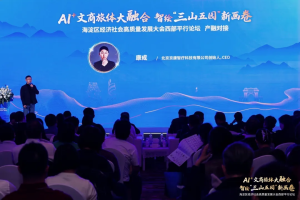
1. Kang Cheng | Founder / CEO: Holds a double degree from Shandong University and a master’s degree from the joint program between Zhejiang University and École Polytechnique; possesses experience in overseas XR product development and as a technology executive at listed companies; involved in multiple digital healthcare industry association initiatives.
2. Cao Lu | Co-founder / CTO: PhD in Computer Science from Santa Clara University (SCU); former Director of International R&D at Infervision; experienced in managing multinational R&D teams and participating in medical device registration certificate applications across multiple countries; research focuses on deep learning and medical brain science algorithms.
3. Ma Ning | Chief Brain Science Expert, Head of Research Department: PhD in Life Sciences from the University of Science and Technology of China; Researcher at Hangzhou Institute of Medicine, Chinese Academy of Sciences; recipient of the Zhejiang Provincial Thousand Talents Program; Visiting Professor at Zhejiang University; Principal Investigator at the Brain Science Center of RIKEN, Japan; primarily engaged in human brain neural information processing research, promoting the engineering implementation of diagnostic and therapeutic technologies for brain disorders.
4. Pan Yanzhao | Expert in Brain-Computer Interface and Neural Interaction: PhD in Artificial Intelligence from Brandenburg University of Technology Germany; research background in non-invasive brain-computer interface and multimodal physiological signal decoding; responsible for translating algorithm prototypes into full-system engineering implementations.
5. Mao Yetian | AI R&D Team Lead / VP of R&D: Graduated with a major in Software Engineering from the University of Tokyo; formerly worked at SoftBank’s AI subsidiary; experienced in managing multinational AI R&D teams; engaged in medical AI systems engineering R&D.
6. Zhang Pengcheng | Capital Markets Partner: Founding Partner of Danyu Capital; former Partner and Group Vice President at Zero2IPO Capital; responsible for the company’s capital markets operations.
7. Xu Nan | Board Secretary: Background as a board secretary for securities firms and listed companies; participated in IPOs, investment, financing, and M&A projects for multiple enterprises; responsible for capital markets compliance affairs.