In our previous post, we shared the good news of the three-party collaboration winning an award; this time, let's fully decode this national grand prize. On September 22, the finals of the 2026 Global Brain-Computer Interface × Healthcare Innovation Scenario Competition concluded in Hangzhou. Hangzhou NEUREAL Technology Co., Ltd., together with the Hangzhou Institute of Medicine, Chinese Academy of Sciences, and Zhejiang Provincial Tongde Hospital, formed an "Industry + Research + Clinical" joint team. Their "Brain-Computer Interface + Virtual Reality Innovation" project stood out among strong teams nationwide, winning the third prize. A heavyweight collaboration between an enterprise, a national research institution, and a top-tier hospital has thus stepped onto the podium of China's highest-level BCI competition.
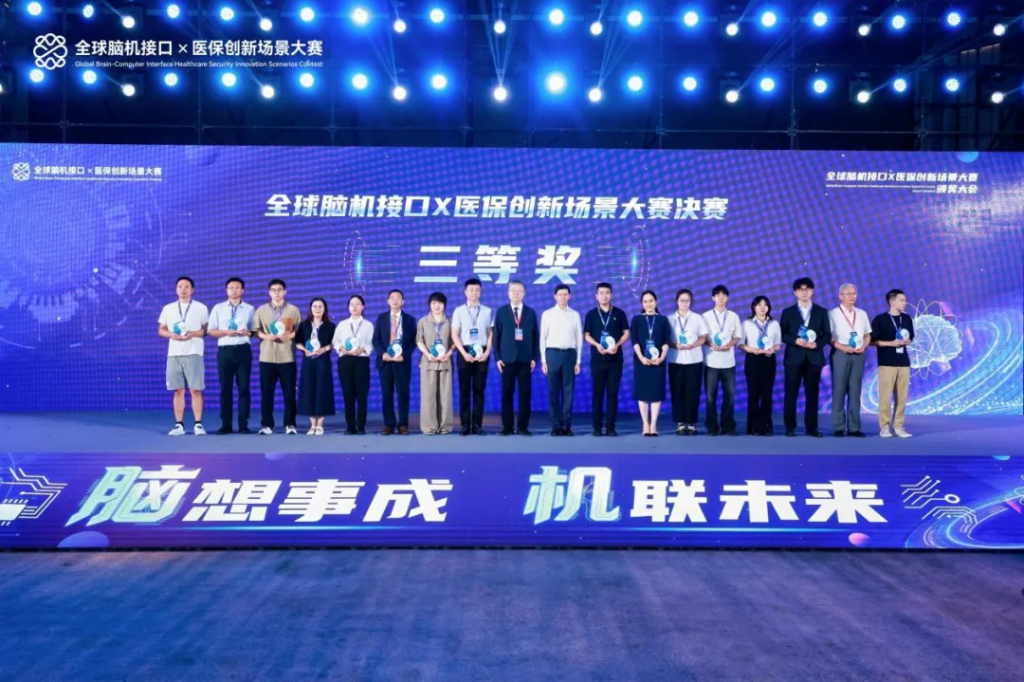
As the first national competition in China focusing on BCI and healthcare innovation scenarios, this edition attracted 415 teams from 22 provinces (municipalities, autonomous regions) across China, as well as countries and regions including the US, UK, Germany, and Singapore since its launch in June. Ultimately, 251 projects advanced to the finals.
For NEUREAL, this award is not only a milestone recognition of the project's innovation but also brings greater industry attention to a non-invasive BCI digital intervention solution for emotional disorders in children and adolescents.
So, what exactly does this project do?
From "VR Training" to "BCI + VR + Intelligent Regulation"
The official name of the participating project is the "Non-invasive Brain-Computer Interface Multimodal Virtual Reality Therapeutic System." Targeting scenarios related to emotional disorders in children and adolescents, it integrates technologies such as non-invasive EEG, Heart Rate Variability (HRV), Artificial Intelligence (AI), Virtual Reality (VR), and transcranial Direct Current Stimulation (tDCS) to explore more personalized and digitalized emotional intervention pathways.
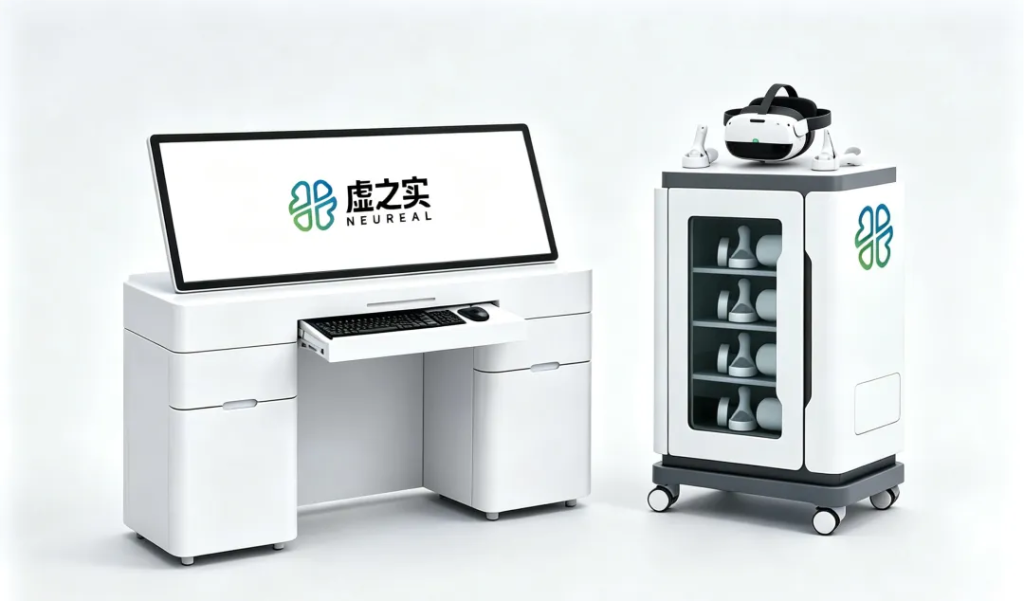
The core idea of the project is not simply using VR as an immersive training tool, but enabling the system to "perceive states, analyze states, and adjust training based on those states."”。
Specifically, the system first collects state information of users before and during training via multimodal signals such as EEG and HRV, establishing individual state profiles around metrics like attention, relaxation, stress, arousal, pleasure, and fatigue. Subsequently, the system recommends corresponding training modules based on individual baselines and real-time states, dynamically adjusting parameters such as task difficulty, stimulation intensity, and interaction rhythm during training.
This means that the same VR training scenario no longer runs according to a fixed process but can be adjusted accordingly based on different users, training stages, and current states.
From Acquisition to Regulation, Building a Dynamic Closed Loop
In the competition defense proposal, the project further developed a "VR + EEG closed-loop regulation + tDCS" tripartite design.
Among them, VR provides controllable immersive scenarios and interactive tasks; EEG handles state feedback and closed-loop regulation, dynamically adjusting training difficulty based on brainwave states and task performance; tDCS performs personalized current configuration combined with prior EEG analysis results, synergistically designing immersive scenarios with electrical stimulation interventions.
For example, in the "Fruit Crusher" module, the system adopts a Go/NoGo task paradigm distinguishing left and right hands, combining 8-channel EEG, self-built metrics, and task performance to adjust training difficulty in real time. Meanwhile, the EEG analysis results from this stage provide the basis for subsequent tDCS current configuration.
Upon entering modules such as "Space Meditation" and "Ventilation Room," personalized current configuration is combined with VR contexts, ensuring that electrical stimulation is not performed in isolation but forms synergy with specific immersive task experiences.
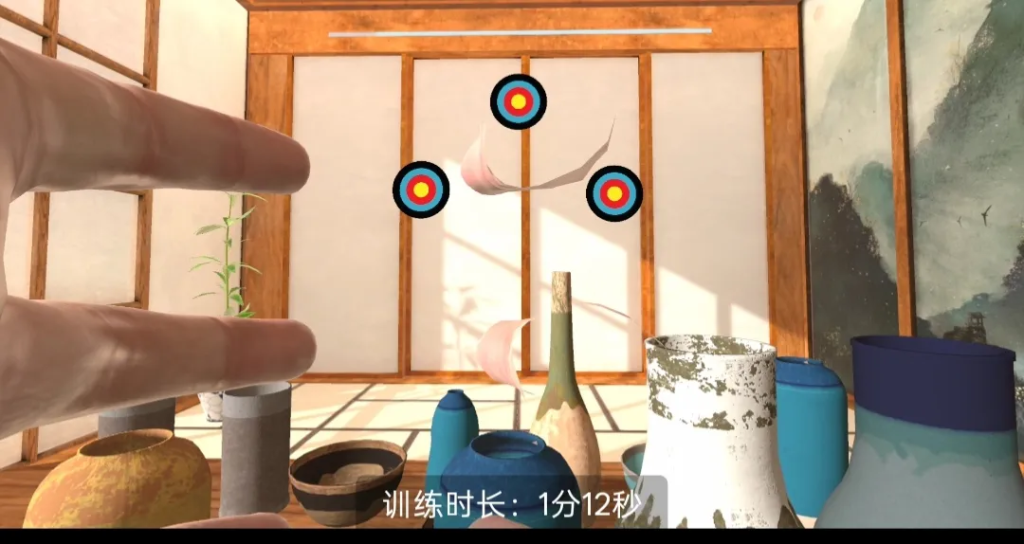
The entire process ultimately forms a cycle of "Acquisition—Analysis—Regulation—Re-acquisition."
That is to say, the system does not end after one training session but continuously obtains new state information during training, adjusts the next task based on feedback, and achieves dynamic closed-loop control.
The advantage of the project lies in technological synergy.
The project is not merely a stacking of technical terms like BCI, VR, AI, and tDCS, but rather creates synergy among these technologies around actual application scenarios.
01 First, the project addresses the question of "How to assess."
Traditional assessment of emotional states relies heavily on scales, interviews, and clinical observation, while children and adolescents exhibit individual differences in emotional expression, self-awareness, and cooperation. The project collects multi-dimensional information through EEG, HRV, and training process data, providing an objective data foundation for state assessment, training plan adjustment, and process tracking.
02 Second, it addresses the question of "How to train."
The system does not adopt a completely uniform training plan but starts from individual baselines, matching different training modules based on state indicators, and adjusting training content and rhythm according to age, interest preferences, and real-time states to improve the match between the training plan and individual conditions. The project application summarizes this as "Baseline Assessment—Intelligent Recommendation—Module Training—Dynamic Regulation."
03 Third, it addresses the question of "How to adjust during training."
The system continuously collects EEG, HRV, and task behavior data, dynamically adjusting VR scene difficulty, stimulation intensity, interaction frequency, and scene switching speed based on real-time states. It also includes safety response mechanisms such as fatigue monitoring and alerts, downgrading, pausing, and termination.
04 Finally, it addresses the question of "How to manage long-term."
Data generated from each training session can be recorded, including physiological signal changes, training modules, duration, task performance, parameter adjustments, and abnormal events, forming periodic reports to provide a data foundation for subsequent plan optimization and long-term follow-up.
Therefore, compared to standalone VR training devices, this project emphasizes "data-driven dynamic regulation."
Two partner institutions support the project's further progression toward clinical application.
It is worth noting that this project was not advanced by NEUREAL alone but in collaboration withthe Hangzhou Institute of Medicine, Chinese Academy of Sciences, and Zhejiang Provincial Tongde Hospital..
The synergy between the industrial technology team and research/clinical institutions allows project R&D to better align with actual application needs and provides a collaborative foundation for subsequent clinical research, scenario validation, and application evaluation.
For BCI, moving from laboratory technology to real-world application requires not only hardware and algorithm capabilities but also continuous addressing of issues such as clinical adaptation, usage workflows, data evaluation, and application standards.
This collaboration with the Hangzhou Institute of Medicine, Chinese Academy of Sciences, and Zhejiang Provincial Tongde Hospital signifies that the project is advancing further towards a synergy of "Technology R&D + Scientific Validation + Clinical Scenarios."
Exploring a BCI Application Pathway Through One Project
This competition focused on comprehensive performance including brain signal acquisition, human-computer interaction efficiency, and practical application capabilities. The expert panel noted that BCI projects should not only focus on technical parameters but also prioritize clinical adaptability, scenario practicality, and public accessibility.
This aligns perfectly with the project's design philosophy.
From an application perspective, the project is currently planned for scenarios including hospitals, psychological rehabilitation centers, school mental health services, and home-based assisted training. Through features such as data recording, clinician-side management, and remote viewing, it explores extending from single-session training to continuous management.
Regarding healthcare insurance innovation scenarios, the project records training frequency, duration, task completion status, physiological signal changes, scale variations, and protocol adjustments, providing a data foundation for future digital rehabilitation service evaluation, real-world data accumulation, and cost-effectiveness studies.
Of course, for Brain-Computer Interface (BCI) and digital therapeutics, transitioning from R&D to mature clinical applications still requires ongoing research validation and standardization. This award represents a milestone in technological exploration and scenario innovation rather than a final destination.
Winning the third prize in this competition marks a significant milestone. In the future, NEUREAL will continue to advance product development and application validation centered on non-invasive BCI, AI, and VR technologies. Leveraging scientific research and clinical partners, we will further explore digital applications of BCI in emotional health for children and adolescents and related brain function scenarios.