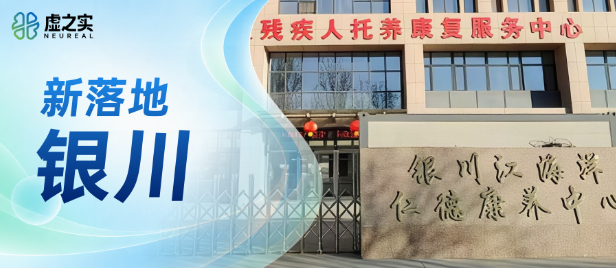
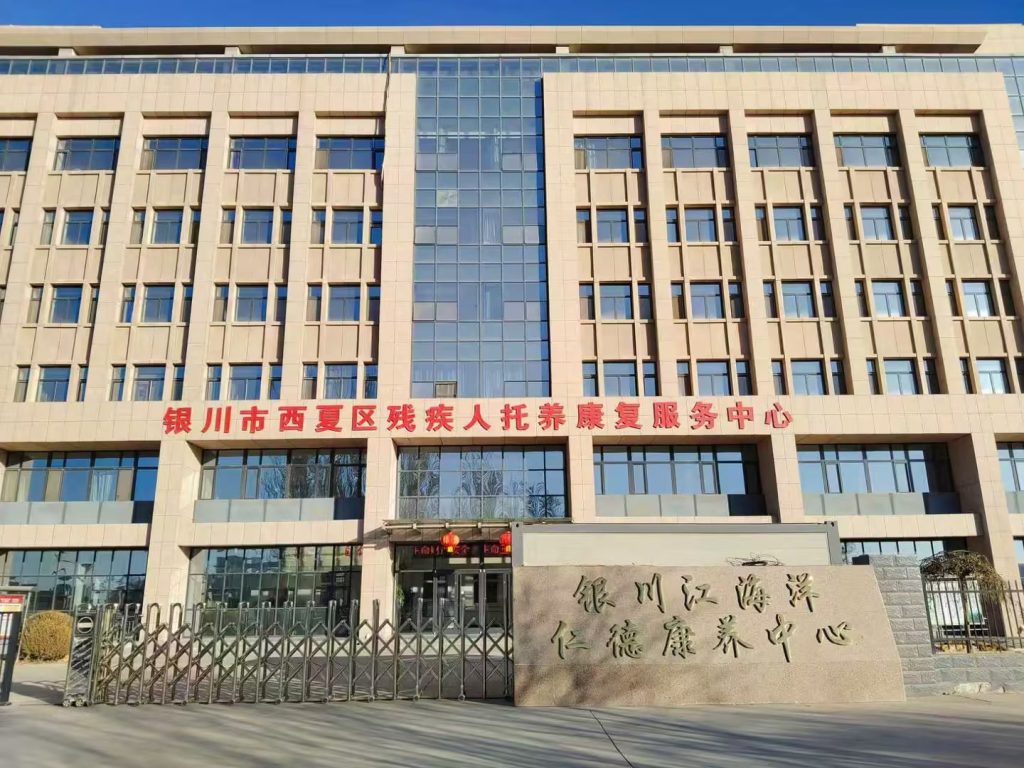
Recently, the YKVR-1 cognitive rehabilitation system developed by Hangzhou NEUREAL Technology Co., Ltd. was officially deployed at the Yinchuan Xixia District Center for Care and Rehabilitation of Persons with Disabilities. Integrating Brain-Computer Interface (BCI) and Virtual Reality (VR) technologies, the system explores the application of immersive, digital rehabilitation training in grassroots disability services, providing new technical tools for institutions conducting cognitive function-related training.
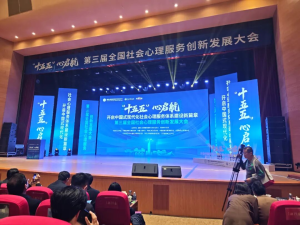
This deployment also represents an exploration in technology-assisted support for persons with disabilities. Featured as one of the grassroots practice cases in the Third Yellow River Nine Provinces and Regions Charity Activity for Assisting Persons with Disabilities, the project further demonstrates the potential of digital technology applications in grassroots rehabilitation service scenarios.
From Traditional Training to Digital Rehabilitation: Exploring New Grassroots Service Scenarios
The Xixia District Center for Care and Rehabilitation of Persons with Disabilities is a key livelihood project in Xixia District and the first center for care and rehabilitation of persons with disabilities in Yinchuan. Operating under a public construction and private management model, the center integrates functions such as pediatric rehabilitation, institutional care, adult rehabilitation, and vocational rehabilitation, building a comprehensive service system that combines "rehabilitation + care + supported employment."
To date, the center has provided care for 53 persons with disabilities and 7 elderly individuals, while offering integrated rehabilitation and education services to 13 children and adolescents aged 7–17 with disabilities.
As demands for grassroots rehabilitation services continue to diversify, leveraging digital technology to enhance training scenario richness, standardize process documentation, and improve traceability of rehabilitation data has become a key direction for upgrading service models. The introduction of the YKVR-1 cognitive rehabilitation system serves as a practical exploration of integrating digital technology into grassroots rehabilitation settings.
Immersive Scenarios Supporting Cognitive Function Training
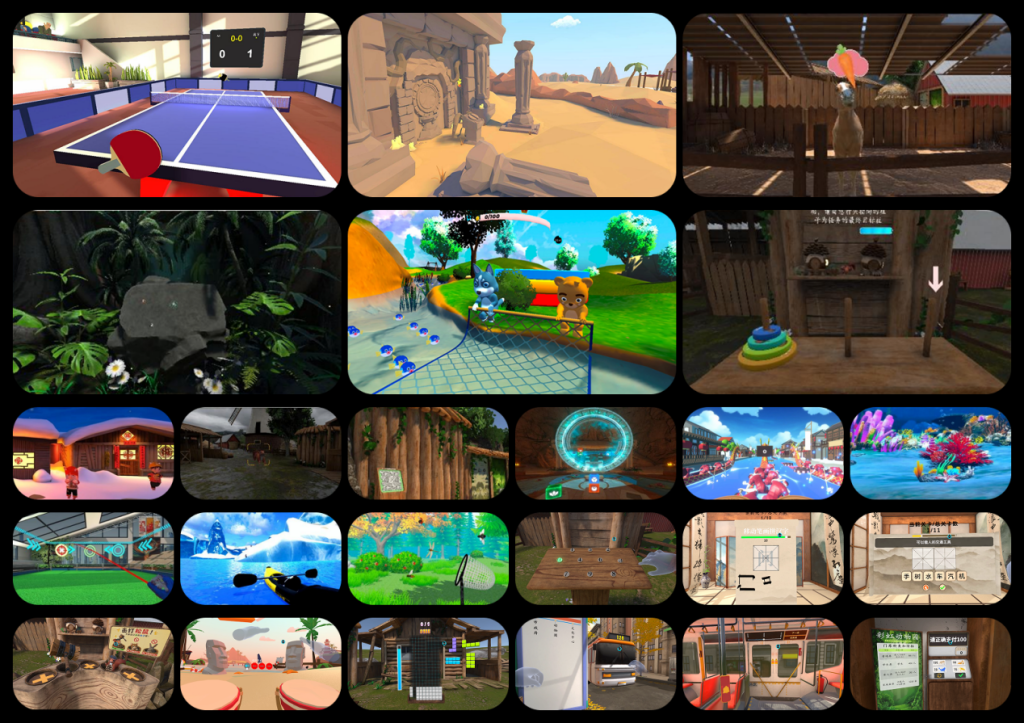
The YKVR-1 cognitive rehabilitation system integrates VR technology, clinical neuro-rehabilitation intervention theories, and AI data analysis capabilities to establish a digital rehabilitation workflow covering screening, rehabilitation training, efficacy assessment, and long-term management. The system targets brain function-related areas such as Autism Spectrum Disorder (ASD) and cognitive decline, exploring cognitive function training and rehabilitation services.
Compared with traditional training methods, the system uses VR to create realistic daily life scenarios such as supermarket shopping and mazes, allowing users to perform cognitive tasks in a relatively controlled virtual environment, thereby strengthening connections between training content and everyday life.
In practice, therapists can adjust training content and difficulty based on baseline assessments of service recipients. The system records relevant data during training sessions and generates corresponding reports, providing references for therapists to understand the training process and conduct subsequent evaluations.
This approach, which uses digital technology to assist in training, recording, and evaluation, helps enrich the service tools available to grassroots rehabilitation institutions and offers a practical pathway for data-driven management of the rehabilitation process.
Technology-Assisted Support for Persons with Disabilities: Moving from Usability to Service Integration
The deployment of YKVR-1 at the Xixia District Center for Care and Rehabilitation of Persons with Disabilities marks a practical step by NEUREAL in exploring the application of BCI, VR, and AI technologies in disability rehabilitation scenarios.
For grassroots rehabilitation institutions, the true value of technological products lies not only in the technology itself but also in its integration with actual service workflows to form application models suitable for institutions, therapists, and service recipients.
Looking ahead, NEUREAL will continue to focus on R&D and application exploration involving non-invasive brain-computer interfaces, VR, and AI technologies. The company will address scenarios such as care for persons with disabilities, integrated rehabilitation and education for children, and psychological interventions, continuously exploring the fusion of digital technology and rehabilitation services to accumulate more practical experience for the digital development of grassroots rehabilitation services.
Bringing technology into real-world scenarios to better serve rehabilitation needs. NEUREAL will continue to build upon its R&D foundation to explore further possibilities for technology-assisted support for persons with disabilities.