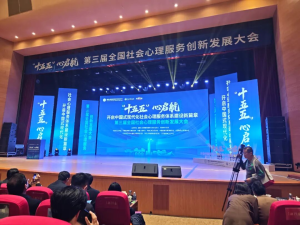
On July 23, the 22nd Annual Meeting of the Chinese Society of Psychiatry (CPA2026) grandly opened in Tianjin. During the conference, Hangzhou NEUREAL Technology, a leading domestic enterprise in non-invasive brain-computer interface (BCI), co-hosted a special session on clinical translation of BCI in psychiatry with the Tianjin Mental Health Service Association and Tianjin Anding Hospital. The session officially launched China's first clinical construction project for non-invasive BCI in psychiatry, leveraging advanced interdisciplinary medical-engineering technologies to drive psychiatric diagnosis and treatment toward a new stage of precision and standardization.

As a core industry-translation session highlighted at this year's CPA annual meeting, the special session gathered top national psychiatric experts, clinical leaders from tertiary hospitals, and industry representatives for in-depth discussions on the clinical implementation, scenario iteration, and inclusive application of non-invasive BCI technology.
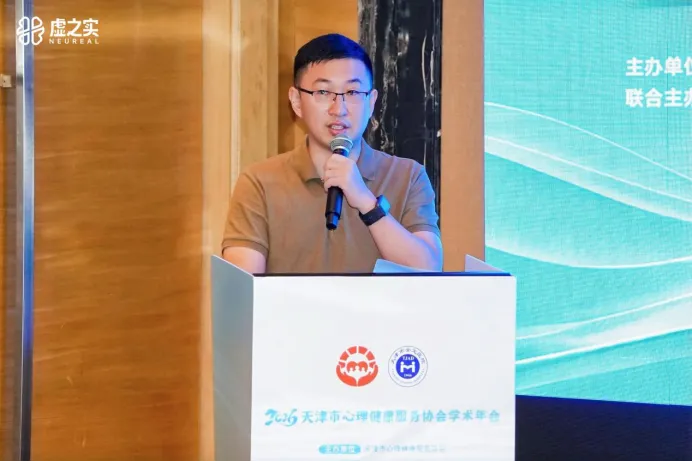
Kang Cheng, Founder and Chairman of NEUREAL Technologystated: "Leveraging the premier industry platform of the CPA2026 annual meeting, we have jointly launched a clinical construction project with top national psychiatric experts. Our aim is to bridge the 'last mile' of translating medical-engineering achievements, truly transforming laboratory-based BCI technology into routine clinical diagnostic and therapeutic tools that are accessible to patients."
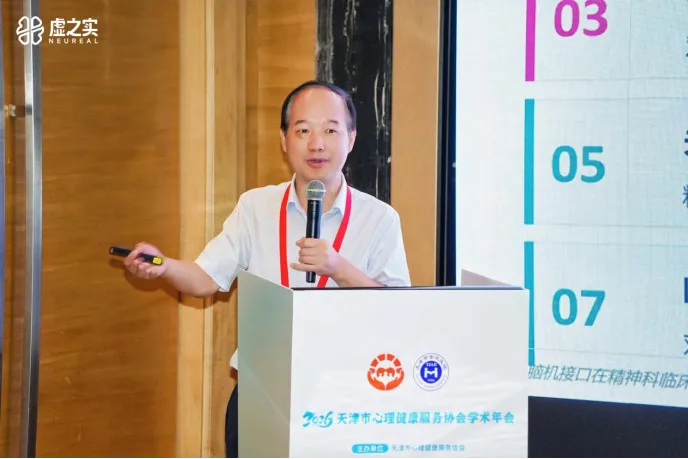
At the meeting,Director of the Department of Psychiatry at Xiangya School of Medicine, Central South University、Wang Xiaoping, Director of the National Center for Mental Disorderspointed out that the industry should rely on AI technology to build dynamic biomarker databases in the future, achieving precise subtype stratification of mental disorders. Key breakthroughs are needed in diagnosing and treating various refractory mental disorders, while high importance must be attached to EEG data privacy protection and ethical standards to ensure steady technological iteration.

Jia Fujun, Leading Talent in Guangdong Medical Sciences and Chief Physician at Guangdong Provincial People's Hospital (Guangdong Mental Health Center)noted that non-invasive neurofeedback technology has unique advantages of being safe, non-invasive, and capable of precisely targeting neural circuit remodeling, making it particularly suitable for adolescents with depression who currently lack clear drug indications. Currently, the technology covers multiple mental disorders including PTSD, anxiety and depression, and substance addiction. Combined with VR technology, it significantly enhances patient engagement and treatment precision.

Deng Wei, Chief Physician at Hangzhou Seventh People's Hospital (Mental Health Center Affiliated to Zhejiang University School of Medicine)observed that NEUREAL's multimodal intervention scheme combining VR scenarios with tDCS and neurofeedback technology has demonstrated excellent efficacy in clinical interventions for adolescent mental disorders, providing a novel solution for child and adolescent mental health services.

Ma Ning, Researcher at the Hangzhou Institute of Medicine, Chinese Academy of Sciences, and Chief Brain Science Expert at NEUREAL Technologyexplained that NEUREAL's proprietary "VR standardized scenario induction + real-time BCI modulation" scheme relies on an AI embodied world model driven by both data and knowledge. It actively induces highly stable task-state EEG signals, yielding intervention effects significantly superior to traditional resting-state treatment modes.
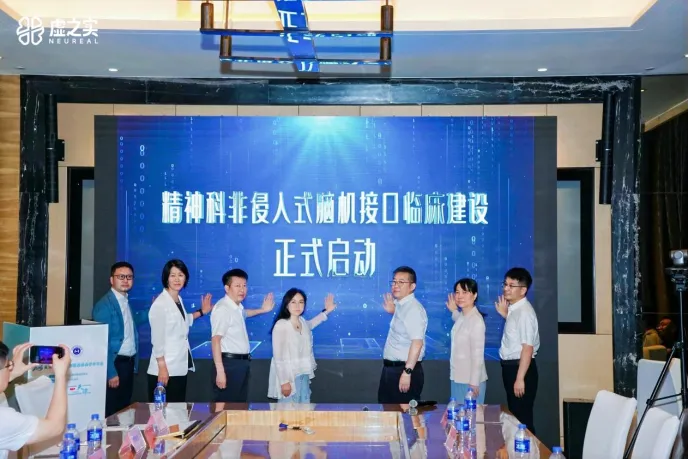
At the meeting, China's first clinical construction project for non-invasive BCI in psychiatry was officially launched. Led by NEUREAL Technology, the project involves six top-tier medical institutions, including Tianjin Anding Hospital and the Institute of Mental Health at Central South University. It marks a milestone in the transition of domestic non-invasive BCI from R&D to large-scale clinical implementation.
The project adopts a "one center, three disciplines" layout, with psychiatry as the core, simultaneously covering neurology and pediatrics to establish a clinical application system across all age groups and disease spectra. Centered on precise neural signal induction technology, it builds a closed-loop system of "VR scenario induction + BCI real-time decoding + adaptive feedback modulation" to achieve active neural remodeling.
The project will help hospitals develop distinctive disciplines, reduce administrative burdens on healthcare staff, and provide individualized treatment plans for patients, creating shared value for all stakeholders. According to the plan, Class III medical device registration for core products will be completed within 1–2 years. Industry standards will be jointly formulated, and a national clinical application alliance will be established to promote the standardized implementation of non-invasive BCI technology, injecting scientific momentum into the high-quality development of China's mental health service system.