In 2010, a young Chinese-American co-founded the SDC Blue Ribbon International Foundation in Canada with multiple philanthropists. Over the past decade, it has leveraged youth power to support disabled adolescents globally, serving over 15,000 children with disabilities and establishing the Blue Ribbon Disability Assistance Fund in China.
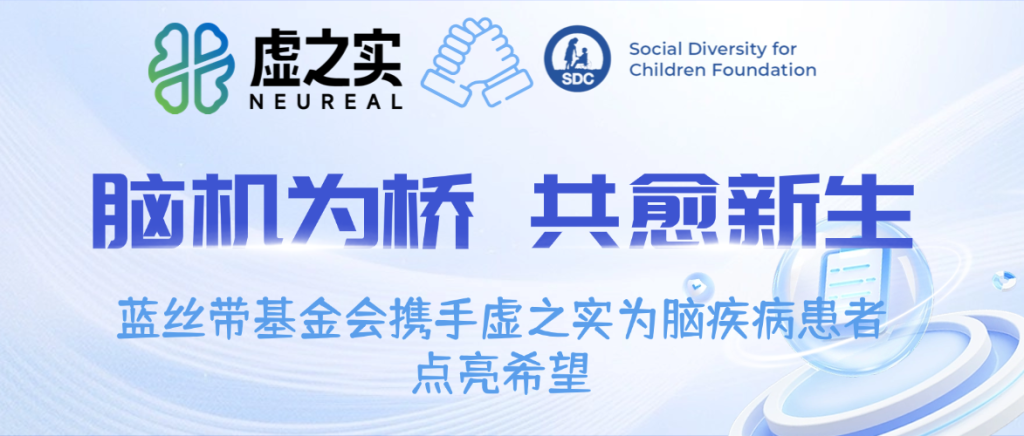
Through long-term public welfare visits, the Foundation identified a common challenge: many children with cerebral palsy suffer from fine motor impairments in their upper limbs. Families face constraints due to time and economic costs of hospital visits, making it difficult to adhere to standardized rehabilitation. Traditional rehabilitation only targets superficial muscles, resulting in slow progress. To break this rehabilitation dilemma, the Foundation partnered with Hangzhou NEUREAL Technology Co., Ltd. (hereinafter referred to as NEUREAL), utilizing its core upper limb rehabilitation module to provide home-based neurological rehabilitation for children with cerebral palsy.
NEUREAL is a national-level "Specialized, Refined, Distinctive, and Innovative" Little Giant enterprise focused on the medical implementation of non-invasive brain-computer interfaces. Since its establishment in 2015, it has deeply cultivated precise diagnosis and treatment of brain disorders and neurological rehabilitation. It innovatively created a closed-loop intervention technology system featuring "precise neural signal induction + BCI+X," integrating EEG acquisition, VR multimodal interaction, transcranial electrical stimulation, and AI algorithms to overcome industry pain points such as unstable signals in traditional BCI devices and fragmented rehabilitation processes. The company brings together interdisciplinary expert teams in neuroscience, AI, and clinical medicine from the Chinese Academy of Sciences (CAS), Zhejiang University, and overseas universities. It holds 7 domestic and international medical device registration certificates, over 80 patents and software copyrights, and has accumulated tens of millions of multimodal clinical data points. Its products cover more than 1,000 top-tier hospitals nationwide, addressing over ten types of intervention scenarios including neurodevelopmental disorders in children, psychiatric care, stroke rehabilitation, and cognitive decline in the elderly. Additionally, it possesses overseas qualifications such as EU CE, UK MHRA, and Thailand TFDA, achieving dual-line deployment of professional in-hospital treatment and lightweight home-based rehabilitation.
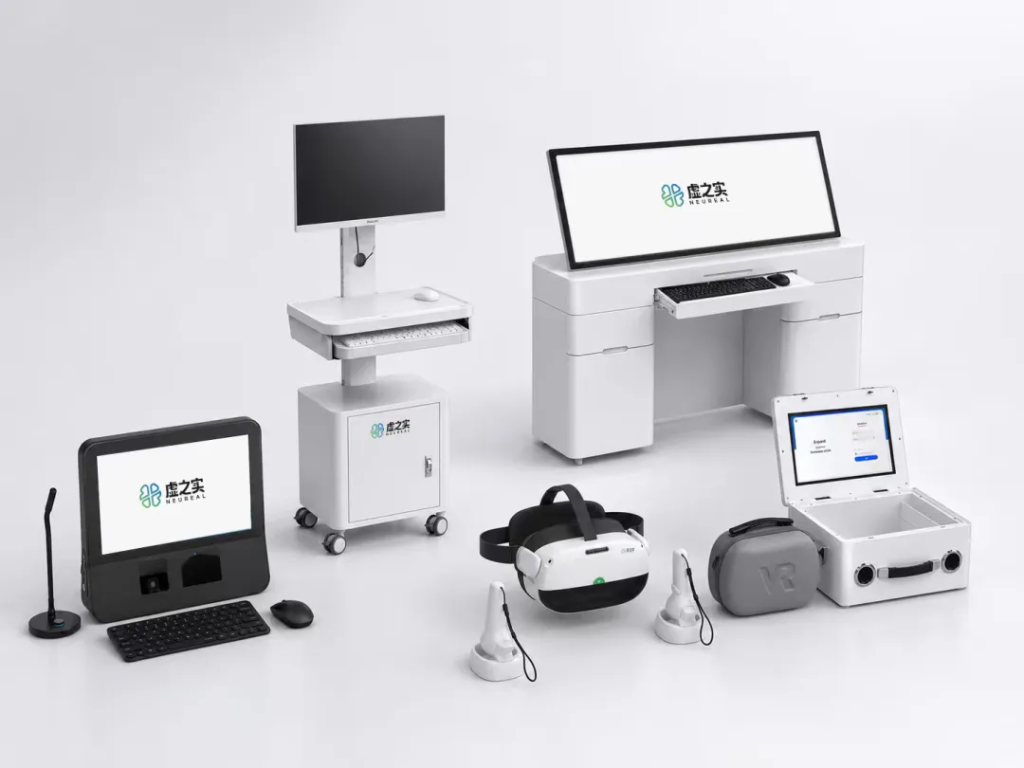
The core vehicle for the collaboration between both parties is NEUREAL's self-developed upper limb rehabilitation module. This equipment is completely distinct from traditional externally driven rehabilitation devices. Relying on non-invasive BCI to precisely capture motor intentions from the brain, it actively activates damaged motor neural circuits through immersive VR gamified scenarios, guiding children with cerebral palsy to autonomously complete targeted training such as grasping, holding objects, and fine writing. The entire training process automatically records complete neural and behavioral data. Rehabilitation physicians can remotely access patients' training records in real-time and dynamically adjust training difficulty and intervention plans based on hand motor recovery, enabling patients to receive professional rehabilitation guidance equivalent to hospital standards without leaving home.
Multiple children with cerebral palsy funded by the Foundation have shown intuitive and tangible rehabilitation improvements after continuous use of this rehabilitation system: unconscious hand tremors significantly reduced, arm control stability greatly improved, and actions previously difficult to perform, such as autonomous grasping and daily object holding, can now be completed smoothly. This truly validates the intervention value of VR-BCI closed-loop technology for children with motor disorders.
In the future, the Blue Ribbon Foundation and NEUREAL will continue to deepen their long-term strategic partnership. By leveraging technology for good, they will persistently explore new models for home-based neurological rehabilitation for children with disabilities, helping more families break free from the dilemma of "difficult rehabilitation, high cost." Together, they will illuminate hope for children with brain disorders, allowing them to embrace a brighter future with greater confidence.