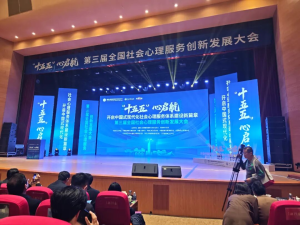
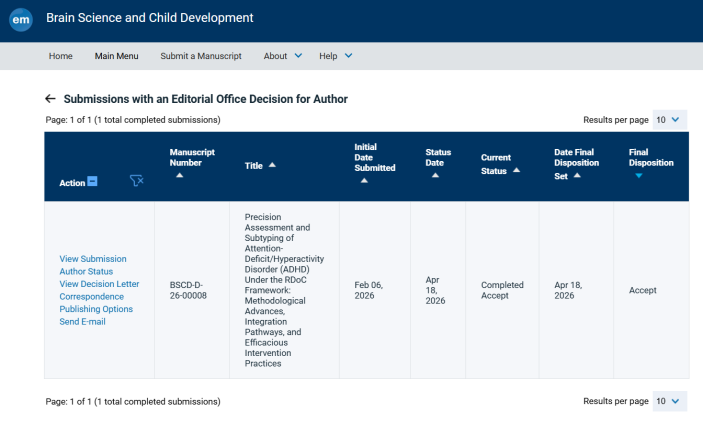
Recently,Hangzhou NEUREAL Technology Co., Ltd.in collaboration withZhejiang Provincial Tongde Hospital, Hangzhou Institute of Medicine, Chinese Academy of Sciences, and Hangzhou Dianzi University,completed a review paper in the field of ADHD precision diagnosis and treatment, which has been officially accepted for publication by the international brain science journal "Brain Science and Child Development" (officially accepted on April 18, 2026).
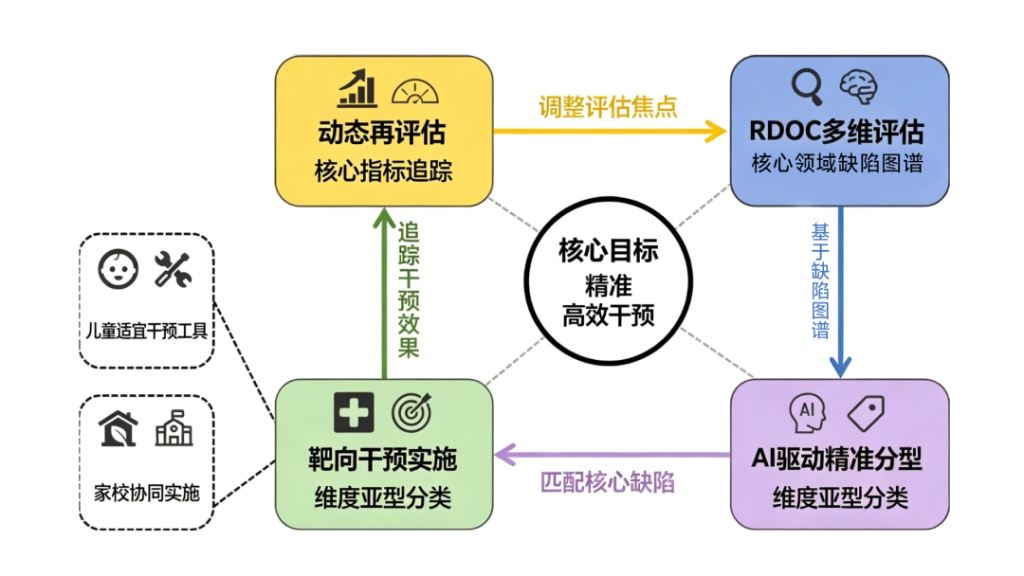
This paper is the first milestone study in China to systematically apply the RDoC (Research Domain Criteria) framework proposed by the U.S. NIMH to Attention Deficit Hyperactivity Disorder (ADHD) in children, fully constructing an RDoC-based closed-loop model of ADHD precision "assessment – subtyping – intervention – re-assessment." It marks the completion of systematic construction from theoretical framework to technical pathway in China's AI precision diagnosis and digital therapeutics translation for pediatric neurodevelopmental disorders, providing authoritative academic support and clinical translation basis for the company's core strategy of"Brain-Computer Interface (BCI)BCI)+X spatiotemporal localization of key targets and precision intervention technologies for brain disorders."
Interpretation of Core Paper Information
1. Research Background and Pain Points Addressed
There are over 23 million children with ADHD in China, but traditional diagnosis and treatment have long faced three fundamental dilemmas: diagnosis relies entirely on subjective symptom scoring without objective biomarkers; interventions adopt a "one-size-fits-all" approach with significant individual differences in drug and behavioral training efficacy; and interactions between biological mechanisms, environment, and developmental trajectories are ignored, leading to poor long-term prognosis.
2. Core Research Achievements of the Article
Breaking through traditional symptom-oriented diagnostic thinking, this paper introduces the RDoC framework into the ADHD diagnosis and treatment system for the first time, achieving three core breakthroughs:
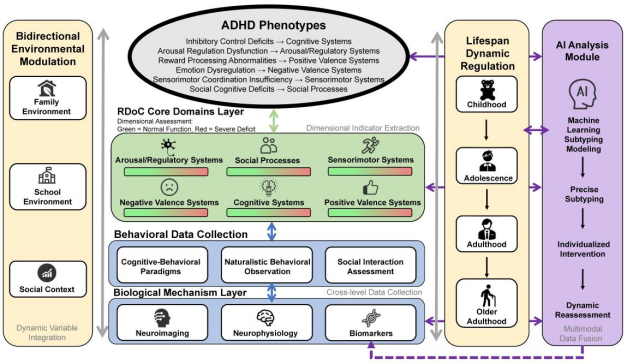
- Constructinga standardized assessment system covering six core domains: encompassing cognitive systems, arousal/regulatory systems, positive valence systems, negative valence systems, sensorimotor systems, and social processing systems, achieving a leap from "symptom description" to "mechanism analysis."
- Proposingthree technical pathways: multimodal objective assessment technology, AI-driven dynamic subtyping models, and a "core domain – environment – development" trinity integrated assessment method.
- Establishing a full closed-loop intervention mechanism of "assessment – subtyping – intervention – re-assessment" : matching precise intervention plans to different RDoC subtypes, with clinical data showing that this model improves symptom remission rates and reduces recurrence rates.Overall conceptual model of RDoC-guided ADHD precision assessment and intervention
NEUREAL Technology has always adhered to the core strategy of "spatiotemporal localization of key targets and precision intervention technologies for brain disorders based on Brain-Computer Interface (BCI)+X," creating a globally pioneering full closed-loop brain disorder diagnosis and treatment system of "sensory induction – target localization – multimodal intervention," dedicated to solving industry pain points of "inaccurate diagnosis, imprecise treatment, and poor prognosis" in global brain disorder care.
1. Technical Strategy: Building a Five-Layer Full-Chain Technical Architecture
Based on non-invasive brain-computer interface, integrating VR/AR multisensory technologies and AI large models, building an integrated technical system of "Perception Layer – Induction Layer – Algorithm Layer – Intervention Layer – Platform Layer":
Core Breakthrough:
- Overcoming the industry bottleneck of quantitative mapping between "multisensory parameters – neural circuits – disease phenotypes," significantly improving the visualization rate of abnormal neural activity.Algorithm Core:
- Training EEG large models and multisensory induction large models based on proprietary multimodal brain disorder data to achieve precise spatiotemporal target localization.2. Product Strategy: Dual-Wheel Drive of Hospital + Home for Full Scenario Coverage
Hospital Side:
- Launching the "Precision Diagnosis and Treatment System for Brain Disorders," providing tertiary hospitals with complete solutions for objective assessment, precise subtyping, and closed-loop intervention.Home Side:
- Developing portable BCI+VR intervention devices and digital therapeutics apps such as "Xinning Zhijing," achieving full scenario services of "assessment in hospital, intervention at home, management at school."3. Disease Strategy: Full Spectrum of Brain Disorders
3. Disease Strategy: Full-Spectrum Brain Disorders
Focusing on over 20 brain disorders, including pediatric neurodevelopmental disorders (ADHD, autism), mental health conditions (depression, anxiety disorder), and neurodegenerative diseases (Alzheimer's disease, Parkinson's disease), we are building a universal precision diagnosis and treatment platform for brain disorders.
Beyond Academic Breakthroughs
The publication of this research is not an isolated academic breakthrough but a systematic validation and implementation of the company's BCI+X full closed-loop technology strategy in the ADHD field, solidifying the foundation of our corporate strategy across four dimensions: theory, technology, clinical application, and market.
1. Theoretical Framework Support: Bridging the RDoC Framework with Core Technical Logic
The six core domain assessment system based on the Research Domain Criteria (RDoC) proposed in this paper aligns highly with the company's core technical logic of "sensory-induced manifestation of abnormalities":
- It provides an authoritative theoretical framework for standardizing disease-specific multisensory induction paradigms, addressing the industry challenge of "how to precisely activate abnormal neural circuits."
- It validates the scientific basis of the "dynamic functional target" concept, distinguishing it from traditional static anatomical targets and providing neuroscience evidence for the company's spatiotemporal target localization technology.
- It establishes a "mechanism-oriented" rather than "symptom-oriented" principle for diagnosis and treatment, fully consistent with the underlying logic of the company's full closed-loop technology system.
2. Core Technology Validation: Confirming the Advancement of AI and Multimodal TechnologiesThe core technical methods in this paper represent specific applications of the company's core technologies in the ADHD field:
- Multimodal Data Fusion Technology:It validates the feasibility of fusing EEG + fNIRS + eye-tracking + behavioral data, perfectly matching the perception layer's technical architecture.
- AI-Driven Dynamic Phenotyping: The AI model's phenotyping and intervention matching efficiency significantly surpasses manual methods, confirming the decoding capabilities of large models.
- Closed-Loop Intervention Mechanism:It demonstrates the clinical efficacy of the full closed-loop process of "real-time monitoring – intelligent analysis – precise intervention – dynamic assessment," providing theoretical support for the company's intervention layer technology.
3. Accelerated Clinical Translation: Providing Authoritative Basis for Product Registration and Implementation
- It provides core academic support for the medical device registration certificate of the company's ADHD precision diagnosis and treatment system, accelerating the product approval process.
- The standardized assessment and intervention protocols proposed can be directly applied to the design of subsequent multicenter clinical trials, reducing clinical translation risks.
- The joint research model with top-tier tertiary hospitals further strengthens the company's clinical collaboration network, laying the groundwork for hospital-side product promotion.
4. Market and Brand Empowerment: Establishing Industry Leadership
- Publication in an internationally authoritative journal establishes the company's academic leadership in ADHD precision diagnosis and treatment, enhancing confidence among regulators, hospitals, investors, and patients.
- It provides scientific endorsement for the company's "hospital-to-home" full-scenario business model, accelerating the penetration of home-based products into the market.
- It enhances the brand influence in the BCI healthcare sector, paving the way for expansion into other areas such as depression and autism.
Looking ahead, NEUREAL will deepen the integration of cutting-edge neuroscience and digital technology, continuously expanding the boundaries of brain health management.